
What Are The Colours of Holi?
Holi, otherwise known as ‘the festival of colours’ is an ancient Hindu tradition that celebrates a variety of things such as the eternal and divine love of Radha Krishna, the triumph of good over evil and the arrival of spring.
During the festival, everyone participates in the ‘throwing of colours’ which involves exactly that. As well as throwing the colours, festival goers rub the colour powder onto each others faces - an act of love and friendship.

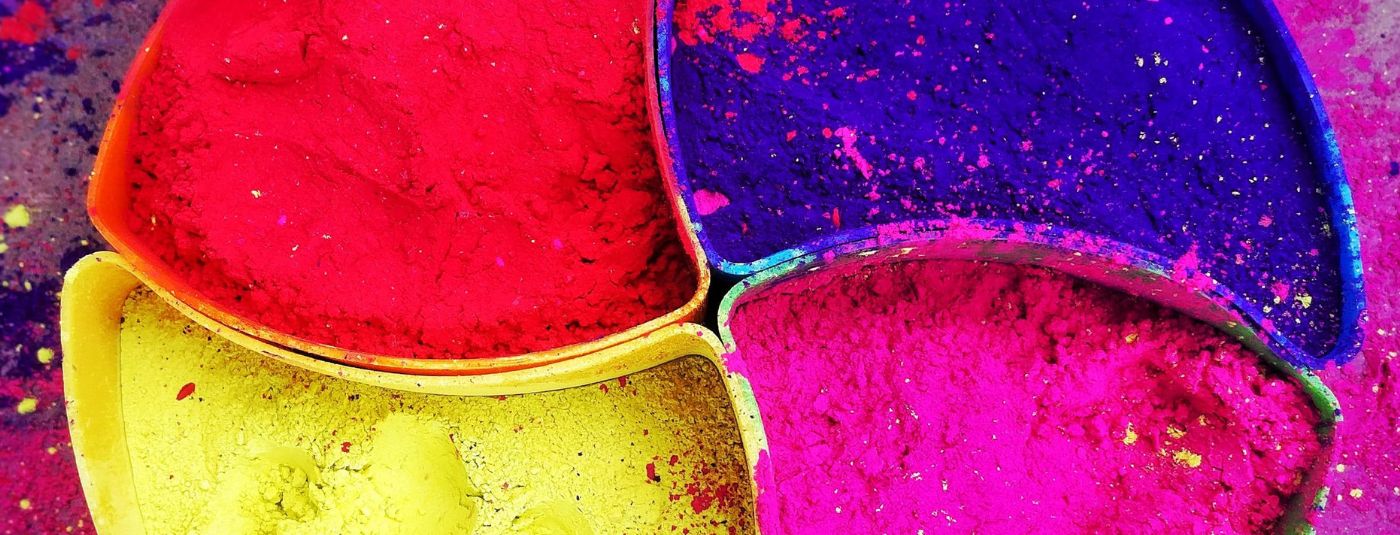
Traditionally only the colour red was utilised during Holi celebrations, however as time has passed, more and more colours have been added to the rainbow of colours used. The colour choices aren’t just because they’re pretty though, they all have a meaning associated with them too. So we thought we’d provide a brief description of why each colour is important and what they represent.
Red

The colour red is associated with a number of traditions in India. Brides and married women wear red and it’s also the colour of weddings and life in general. Not just for Hindus, but for Muslims, Buddhists and Jains too.
When a married woman passes away, her body is traditionally covered in a red cloth, however when a woman becomes a widow, she symbolically never wears red again and at her death is instead covered in white (to signify purity and renunciation).
Many people in India also mark their forehead with a red dot known as a tilak. This is to remind them that the body is a temple and that everyone and everything on the planet is sacred. It also signifies which Hindu religious group the person is part of and is said to bring the wearer good luck and ensure their health and safety.
Blue

In Hinduism there are three main deities: Shiva The Destroyer, Brahma The Creator and Vishnu The Preserver. Vishnu spends eternity sleeping until they are called upon when a crisis occurs. They then appear as one of their ten avatars and proceed to save the world. Vishnu’s blue skin is one of the major inspirations for this choice of colour.
Green

Green represents the celebration of nature and happiness and is also the colour associated with one of Vishnu’s avatars, Rama, who spent the majority of their life in exile in the forest. In certain areas of central India, married women often wear green bangles and saris in Rama’s honour. However a widow would never wear green.
Yellow

The sacred colour of India, yellow is the colour of sunshine and happiness. Many of the gods such as Vishnu and Krishna are often depicted wearing yellow and the colour itself is actually believed to have healing powers. This is probably due to its association with turmeric, which has been used for medicinal purposes for centuries within India.
Pink

This is an innocent and cheerful colour that symbolises youth and playfulness. It’s a more recent addition to Holi celebrations and can often be seen in the clouds of colour powder that smother the streets of India during the celebration. It’s also not associated with either gender within India, so is a colour of choice for everyone.
Orange

Orange is associated with strength and is a sacred colour in many Eastern religions, Hinduism included. Hindu monks wear orange robes and bright saffron turbans. Orange also represents the sacral chakra, which is the energy centre of one’s self. Whilst the usage of the colour orange in the flag of India represents the strength and courage of the Indian people.
Purple
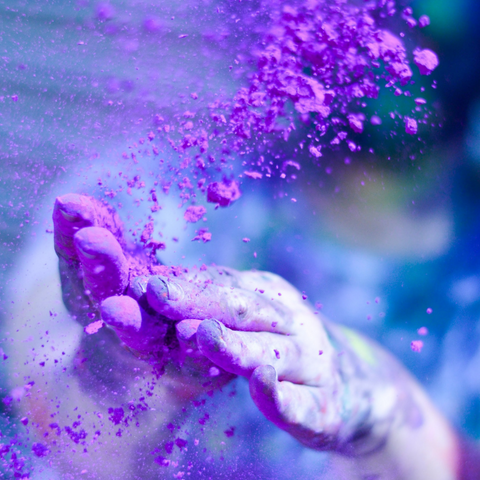
Purple is a combination of the passion of red and the calmness of blue and is often associated with royalty, power and wealth within India. It’s also the colour of the crown chakra, which is the seventh chakra that is located at the top of the head. It’s believed that with a balanced crown chakra, you’ll find increased synergy between your physical self and the spiritual realm. It’s often seen as a bridge to the cosmos itself.
As you can see, there’s a variety of colours used during the festival and each and every one has a meaning or two associated with it. Something to think about the next time you celebrate Holi.
Here at Ministry of Colours, we stock each and every one of these colours in our colour powder range, which are perfect for Holi celebrations and colour powder parties in general. Our clever calculator will help you to determine how much powder you’ll need based on the number of people attending too, so you’ll be celebrating in no time.

What is Holi? The Ultimate Guide
Holi, otherwise known as ‘the festival of colours’ is a vibrant Hindu festival that welcomes in the season of spring. But how exactly did this festival originate and how is it celebrated?
We’ve taken a look into this wonderful celebration to provide you with everything you need to know about this colourful festival.
What is Holi?
The ‘festival of colours’ is an ancient Hindu tradition and one of the most celebrated Hindu festivals, not just in India, but throughout the world. The festival celebrates the blossoming of love, happiness, new life and the arrival of spring, but traditionally the festival celebrates two unique legends in particular.
The Legend of Radha Krishna and Their Eternal Love
The legend behind this particular aspect of the celebration is that in his youth, Krishna was worried that the fair-skinned Radha wouldn’t like him due to his dark skin colour. His mother intervened and asked him to approach Radha and ask her to colour his face in any colour that she wished. She accepted his offer and they became a couple.
Ever since, the playful colouring of one’s face has been celebrated during Holi, as has their divine and eternal love for one another.
King Hiranyakashipu & The Triumph of Good Over Evil
King Hiranyakashipu had become virtually indestructible due to a boon granted to him and in turn, demanded that everyone worship only him. However his son Prahlada, who was devoted to Vishn, disagreed.
The King proceeded to subject his son to various cruel punishments, which didn’t break his resolve. Eventually he asked his evil sister Holika for help, who proceeded to trick Prahlada into sitting on a pyr. However, due to her evil intentions and Prahlada’s devotion to Vishnu, her fire resistant cloak protected him instead, once the pyre was set alight.
This event is still celebrated to this day as Holika Dahan the night before Holi begins, whilst the triumph of good over evil is one of the main celebrations during Holi.

When is Holi?
The celebration of Holi varies each and every year, due to the fact that Holi is celebrated on the last full moon day of the Hindu luni-solar calendar month. In 2023, Holi will be celebrated on Wednesday 8th March.

How is Holi Celebrated?
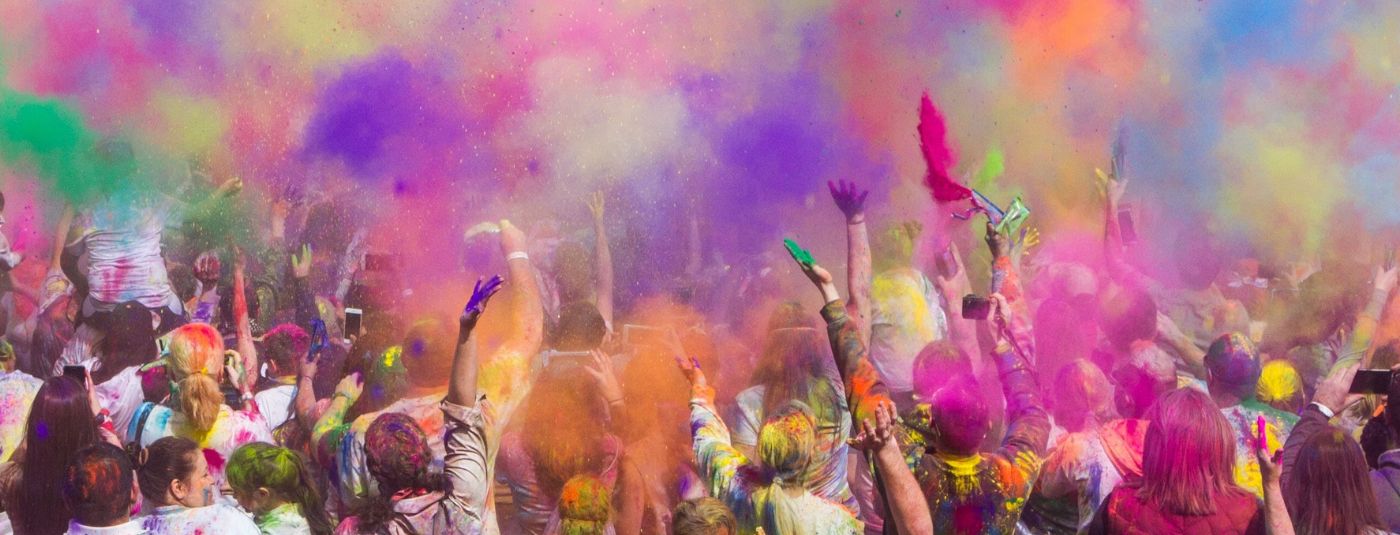
Once the ritual of Holika Dahan is completed, the celebration of Holi or Rangwali Holi as it’s also known, begins. The celebration of Holi is a joyous one, featuring parties, music, special food and the traditional throwing of colours.
A mix of dry colour powder, water guns and water balloons are used to cover their targets with colour. Everyone in open areas such as streets and parks is fair game, which results in an explosion of colour in the streets of India.
Traditionally only the colour red was used during the festival, but today a wide array of colours are used and each one has a meaning associated with it. For example, red is associated with the tilak, blue is connected with Vishnu, whilst orange represents the strength of the Indian people.
After playing with the colours, everyone heads home to clean up, before heading out to visit relatives and friends to exchange sweets, such as Gujiya. This traditional sweet of Holi consists of a dumpling filled with khoya (a dairy product made exclusively with milk) and dried fruits.
This and various street foods such as Samosa Chaat, Kadhi Kachori and Pani Puri are consumed too. Whilst the customary drink of the festival is Thandai, a traditional Indian cold drink made from milk, nuts, seeds and spices.

How Do I Celebrate Holi in the UK?
Holi has become a really popular celebration within the UK, with Hindus looking to celebrate the festival of colours in line with their traditions and religious beliefs.
Here at Ministry of Colours we love to join in on the fun and we’re sponsoring both Rangeela 2023, London’s biggest Holi celebration and Leeds Holi Festival at Beaver Works this year. Whilst our colour powder will also be provided to event attendees at London ki Holi, which we’re really excited about.
But if you can’t make it to a large organised event, you could always throw a colour powder party for you and your friends. Our colour powders are the perfect choice if you’re looking to celebrate Holi in a smaller setting.
Made from natural ingredients, our colour powders are non toxic, ensuring that you can party safely.
If you’re thinking of planning a colour powder party and you need help choosing the right products, please don’t hesitate to get in touch. A member of our team will be more than happy to help you find the right type of powder for your event.
Alternatively, take a look at our FAQs to find out more or use our calculator to see how much powder you might need for your event.